Mitsubishi Car Parts: Genuine & Aftermarket Guide for NZ
December 18th, 2025
Sourcing high-quality Mitsubishi car parts is one of the most effective ways to protect your vehicle’s performance and safety on rugged New Zealand roads. Many Kiwi drivers underestimate how a simple mismatch can affect fuel economy or braking distance, often leading to costly repairs later. It is about finding the correct fitment that balances reliability with your budget.
You might wonder, are genuine spares expensive compared to other brands? This article answers that question and serves as a practical guide to genuine and aftermarket Mitsubishi parts in New Zealand with part codes and fitment tips. At Belair Mitsi Wreckers, we will help you decipher part codes, check compatibility, and secure the best value for your specific model.
Understanding Genuine and Aftermarket Mitsubishi Car Parts
Selecting between genuine and aftermarket Mitsubishi car parts is the biggest step in any repair project. This choice influences the immediate cost and the long-term reliability of your vehicle.
What are Genuine Mitsubishi Car Parts?
Genuine parts come directly from the vehicle manufacturer or their authorised suppliers. These components are identical to the ones installed on your car when it left the factory floor. They carry the manufacturer’s stamp of approval.
Here are the distinct advantages of choosing authentic components:
Exact Fit and Performance. Genuine Mitsubishi car parts guarantee a perfect fit every time, and you do not need to modify the part or the vehicle to make it work. The engineering tolerances match the original specifications exactly.
Warranty Protection. Using genuine parts safeguards your vehicle’s warranty. Manufacturers stand behind these products because they control the quality process, giving owners of newer models peace of mind.
Long-Term Reliability. These parts undergo rigorous testing during the vehicle’s development phase. They handle the specific stresses of your engine or chassis. This results in predictable wear patterns and fewer surprise failures.
What are Aftermarket Mitsubishi Parts?
Aftermarket parts are produced by third-party companies unrelated to the vehicle manufacturer. These companies reverse-engineer the original components to create a compatible replacement.
Consider these factors when looking at third-party alternatives:
Cost Savings. The primary appeal of aftermarket Mitsubishi car parts is the price. Third-party manufacturers compete on cost, which drives prices down. This makes them attractive for older vehicles where a high repair bill might exceed the car’s value.
Variable Quality Standards. Quality varies significantly between brands. Some aftermarket brands improve upon the original design to fix known faults. Others use cheaper materials to cut costs, thereby reducing the part’s lifespan.
Wide Availability. You can often find aftermarket options when genuine stock is low. Many local parts stores carry common maintenance items, such as filters and brake pads. This helps get your car back on the road quickly.
How to Decide Between Genuine and Aftermarket?
Making the right call often comes down to your specific circumstances. You need to weigh the current value of your vehicle against the importance of the repair.
Consider the Vehicle’s Age. Owners of newer models typically stick to genuine Mitsubishi parts to preserve resale value. However, for a reliable 15-year-old runabout, opting for high-quality aftermarket or used genuine components makes financial sense.
Evaluate the Component’s Role. Safety-critical parts such as brake sensors, airbags, and internal engine components almost always warrant the investment in genuine parts. Conversely, non-essential items like trim clips or simple brackets are good candidates for cheaper aftermarket replacements.
Budgetary Constraints. While genuine parts generally carry a higher price tag, they offer assured longevity. You must weigh this upfront cost against the risk of replacing a cheaper, lower-quality part sooner than expected.
Common Mitsubishi Car Parts You Need to Know
Familiarity with your vehicle’s main systems helps you order the right parts. Different models share components, but precise matching is required.
Engine and Drivetrain Components
The engine and drivetrain are the heart of your vehicle. Repairs here are labour-intensive, so using the right part is necessary to avoid doing the job twice.
Camshafts and Timing Components. Timing belts and chains keep the engine’s internal parts synchronised. Mitsubishi timing system parts must match your specific engine code. Using an incorrect tensioner can lead to engine failure.
Transmission and Clutch Kits. Clutches wear out over time and need to be replaced to restore driveability. Automatic transmissions require specific filters. Hence, always check if your gearbox is a CVT or standard automatic before ordering parts.
Cooling System Parts. Radiators and water pumps prevent the engine from overheating. Genuine gaskets are preferred here to prevent leaks. A small coolant leak can cause significant damage if left unchecked.
Part-Code Tips: Look for the alphanumeric code stamped directly on the metal casing of engine parts. This code is more accurate than searching by year alone.
Suspension, Brakes and Chassis Parts
New Zealand roads can be harsh on suspension and braking systems. Keeping these in top condition is a legal requirement for your Warrant of Fitness (WoF).
Shock Absorbers and Struts. These components control the vehicle’s handling. Worn shocks increase braking distances and cause uneven tyre wear. Replacement pairs should always match the specific suspension setup of your trim level.
Braking Components. Brake pads and rotors are consumables that require regular checks. Mitsubishi car parts for brakes must be able to handle the weight of your specific model. Heavier SUVs like the Pajero need different friction materials than a smaller Mirage.
Control Arms and Bushes. Rubber bushes crack over time. Replacing the entire control arm is often easier than pressing in new bushes. This restores steering precision and stops knocking noises.
Fitment Tip: Suspension setups often differ between 2WD and 4WD versions of the same model. Verify your drivetrain layout before purchasing chassis parts.
Electrical, Sensors and Body Panels
Modern vehicles rely heavily on electronics. Body panels also need to match for aesthetic reasons and proper sealing.
Sensors and Wiring. Oxygen sensors and mass airflow sensors feed data to the computer. Mitsubishi car parts in the electrical category are sensitive. Using the correct part number ensures the Engine Control Unit (ECU) receives accurate data.
Alternators and Starters. These units are responsible for charging the battery and starting the engine. Checking the alternator’s amperage rating is required. An underpowered unit cannot support modern accessories.
Body Panels, Glass Doors, and Bumpers. They are needed after minor accidents. Sourcing used Mitsubishi spare parts is a cost-effective way to find panels that might already match your paint code.
Part-Code Tip: Electrical parts frequently have suffix numbers that indicate software updates. Ensure the replacement part matches your vehicle’s production date.
Aftermarket upgrades and performance parts
Some owners want to enhance their vehicles beyond factory standards, which is common for models like the Lancer Evolution or Triton utes.
Performance Intakes and Exhausts. These modifications boost airflow and engine sound. Ensure any aftermarket exhaust meets NZ noise regulations. Quality Mitsubishi car parts in the aftermarket sector will come with compliance documentation.
Suspension Lift Kits. Triton owners often install lift kits for better ground clearance. This alters the vehicle’s geometry. You may need extended brake lines and corrected steering arms to maintain safety.
Heavy-Duty Clutches. Towing heavy loads puts stress on the standard clutch. Aftermarket heavy-duty kits offer greater clamping force. This prevents slippage when hauling boats or caravans.
Caution: Always check if a modification demands certification in New Zealand. Non-compliant upgrades can void your insurance.
How to Search and Order Mitsubishi Parts in NZ
Finding the right part demands a plan rather than a quick guess. Relying on luck often leads to frustrating returns and unnecessary delays that keep your vehicle off the road.
We recommend following a step-by-step approach to ensure you get the right item immediately:
Identifying Your Exact Model and Part Code
The most common mistake is assuming the model name is enough. Manufacturers change specifications mid-year.
Locate the VIN or Chassis Number. Your Vehicle Identification Number (VIN) is the DNA of your car. You can find it on the firewall or registration papers. This 17-character code tells the supplier exactly when and where the car was built.
Identify the Engine and Transmission Codes. The data plate lists your specific build codes. Knowing you have a “2.0L engine” or an “automatic” transmission isn’t enough, as manufacturers often update internal ratios and sensors. You need the exact code to ensure the replacement part matches your vehicle’s specific engineering.
Use Online Model Lists. Trusted suppliers list parts by detailed model categories. Browsing sections for ASX/RVR or Outlander helps narrow down the search. This filters out incompatible Mitsubishi car parts immediately.
Checking Fitment and Compatibility
Once you locate a potential part, you must verify that it fits your specific vehicle. The best method is to cross-reference the OEM code stamped on the old unit with the replacement item. Even a single-digit difference often means the connector or bolt pattern is wrong. We recommend asking a parts specialist to confirm fitment using your registration number, as we have access to database tools that indicate whether an old part number has been updated.
Also, you need to watch out for generation overlaps in registration years. For example, a 2012 Outlander could be the outgoing old model or the incoming new shape. Assuming Mitsubishi parts from different years interchange without checking is a common mistake. It is always helpful to visually compare the part photos with your car to avoid receiving the wrong item.
Evaluating Cost: Are Mitsubishi Car Parts Expensive?
The cost of parts depends on availability and condition:
Compare New vs Used Options. New genuine parts carry the highest price tag. Good-quality used Mitsubishi parts can cost less. This is ideal for body panels, lights, and non-wear mechanical items.
Factor in Delivery Costs. Large items incur freight charges. Local NZ suppliers can offer reasonable nationwide shipping rates. Importing heavy items from overseas is rarely cost-effective for individuals.
Assess Lifecycle Value. A cheap aftermarket part that fails in six months is not a bargain. Paying more for a high-quality used genuine part or a new OEM unit saves money over three years.
Ordering From a Trusted NZ Supplier
Purchasing automotive components from a random online seller is often a gamble. You might save a few dollars upfront, but the risk of obtaining a faulty item is high. Teaming up with a dedicated New Zealand supplier mitigates this uncertainty as reliable wreckers do not just strip cars; we test them. We inspect used items for cracks and functionality before they reach the shelf, ensuring the Mitsubishi car parts you receive are safe to use and install.
You should also look for protection on your purchase. A 90-day warranty is a good standard for used components, providing a safety net if the part has an unseen internal fault.
Real-World Fitment Tips and Model-Specific Guidance
Different Mitsubishi models have unique quirks. Knowing these saves time in the workshop.
Example 1: Mitsubishi Outlander parts fitment tips
The Outlander has a long production history, so parts vary significantly between generations. Common issues include worn tailgate struts, but you must confirm if your model uses a power-lift or manual system before buying. We also see frequent demand for CVT transmission filters. You need to identify the specific Jatco gearbox code to ensure the components you order are correct for your transmission type.
Suspension repairs are also common, particularly rear control-arm bushes, which can cause tyre scrubbing on high-mileage units. Buying a complete used control arm is often more cost-effective than pressing in new bushes. Checking your chassis code is the only way to guarantee compatibility across the different facelifts and engine options.
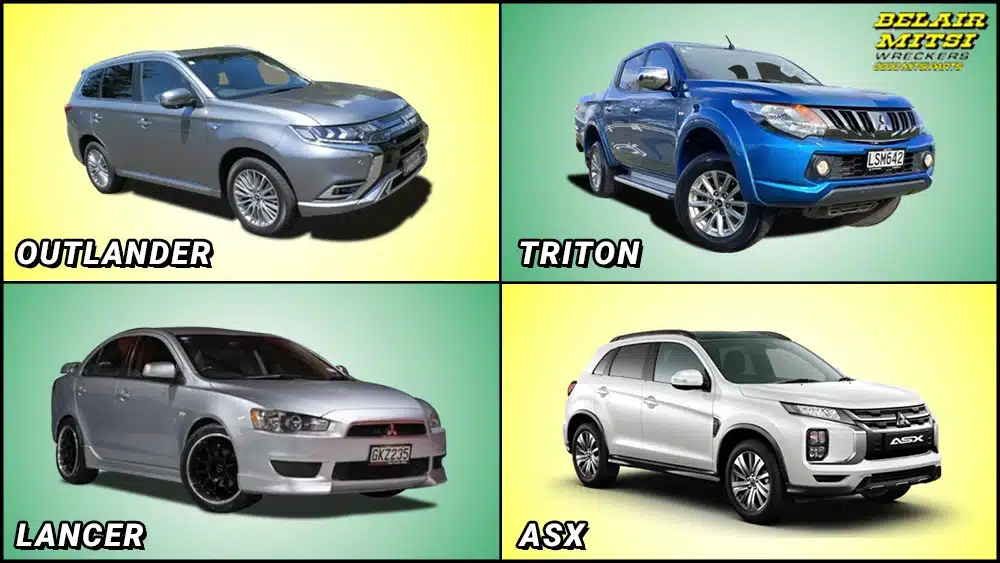
Example 2: Mitsubishi Triton / Lancer / ASX series
These models share engineering but differ in ways that catch buyers off guard. Triton suffers from sagging leaf springs, so you must decide between heavy-duty aftermarket options or softer, genuine used replacements. Lancer owners frequently need window regulators, but Mitsubishi car parts for doors differ specifically between the sedan and Sportback hatch body styles.
The ASX has specific quirks, such as the steering column clock spring, which often triggers the airbag warning light. Fitment here requires precise alignment to avoid snapping the internal ribbon. You should also watch out for Japanese import variants, as their electrical systems and sensors often use unique part codes that do not match those in New Zealand models.
How to Check the Condition of Used Spare Parts
Buying used components saves money, but you need to know what to look for to avoid purchasing a dud. A few simple checks can ensure you get a high-quality, long-lasting item.
Visual inspection tips. Always request clear photos of the exact item you are purchasing rather than relying on generic stock images. You should closely inspect body panels for signs of rust and verify that electrical connectors are not brittle or broken.
Mileage verification. Ask the supplier for the donor vehicle’s total mileage before you commit to the purchase. Lower mileage usually indicates less internal wear on mechanical Mitsubishi car parts, meaning engines and transmissions will have more life left in them.
Compatibility guarantees. Ensure the supplier accepts returns if the part is incorrect for your specific model. Mistakes can happen during the ordering process, and a flexible return policy shows the business has confidence in its stock accuracy.
Where to Buy New and Used Mitsubishi Parts for Sale in NZ
Authorised Dealerships. Dealers are the primary source for brand-new, genuine items. They have access to the full catalogue. However, prices are at the top end of the market.
Automotive Dismantlers (Wreckers). Specialist wreckers are a treasure trove for Mitsubishi car parts. They dismantle end-of-life vehicles and salvage good components. This is the most sustainable and cost-effective way to buy.
Online Marketplaces. General auction sites offer variety but lack quality control. You rely entirely on the seller’s description. There is usually no warranty or recourse if the part fails.
Aftermarket Retailers. Auto parts chains sell common consumables. They are convenient for oil, filters, and batteries. They rarely stock specific body panels or internal engine components.
Source the Right Parts with Confidence
Maintaining your vehicle does not have to be a financial burden or a logistical nightmare. The key is knowing what you need and where to get it. Prioritise genuine Mitsubishi car parts for critical systems to ensure safety and reliability. For older vehicles or non-critical repairs, high-quality used parts offer excellent value. Always verify your model details using your VIN and chassis code before placing an order. These simple steps prevent the hassle of returns and keep your mechanic happy.
We at Belair Mitsi Wreckers pride ourselves on being New Zealand’s trusted source for reliable Mitsubishi components. Our Auckland-based team identifies and matches parts to your specific model, ensuring you get the right fit every time. We stock a comprehensive range of engine components, transmissions, and body panels for varying models. Whether you need a cost-effective used option or a brand-new item, we provide fast nationwide delivery to get you back on the road.
Contact us today and let us find the perfect Mitsubishi car parts for you.
If you're looking for Mitsubishi parts in Auckland or Mitsubishi parts in NZ, Belair Mitsi Wreckers have an extensive range of Mitsubishi car parts and Mitsubishi spare parts. Belair Mitsi supplies high quality Mitsubishi car parts that New Zealand loves!
We'll have one of our expert sales representatives source the parts you need